
Discover the story of Correus, Barcelona's famous ghost metro station located on Line 4 between Jaume I and Barceloneta. Learn why it closed, what remains underground, and how to spot it. Hola Barcelona takes you there!
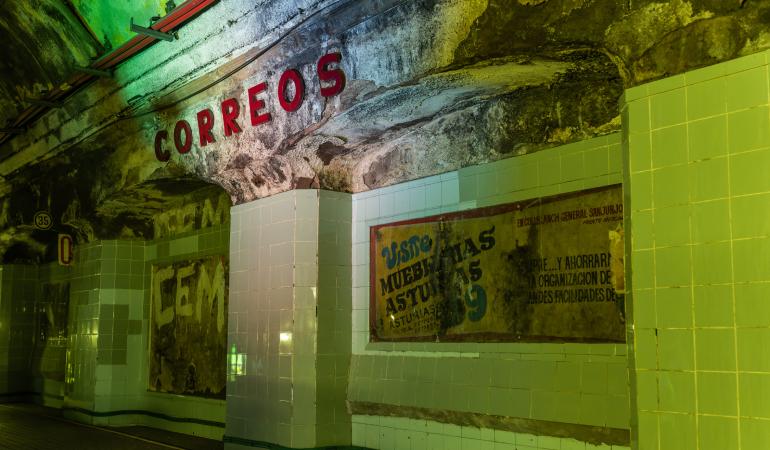
It has happened to all of us at some point: you are sitting on Line 4 (yellow line) of the Barcelona metro between Jaume I and Barceloneta stations, and suddenly, if you look through the window into the darkness of the tunnel, you catch a glimpse of a mysterious shadow, vintage signage, and the remnants of an abandoned platform. It is no optical illusion: it is the famous Correus ghost station, one of the most curious chapters in the history of Barcelona's underground network.
Out of service since 1972, this former station still retains part of its original tiles, commercial advertising, and other authentic architectural features today.
A Journey to 1934: The History of Correus Station
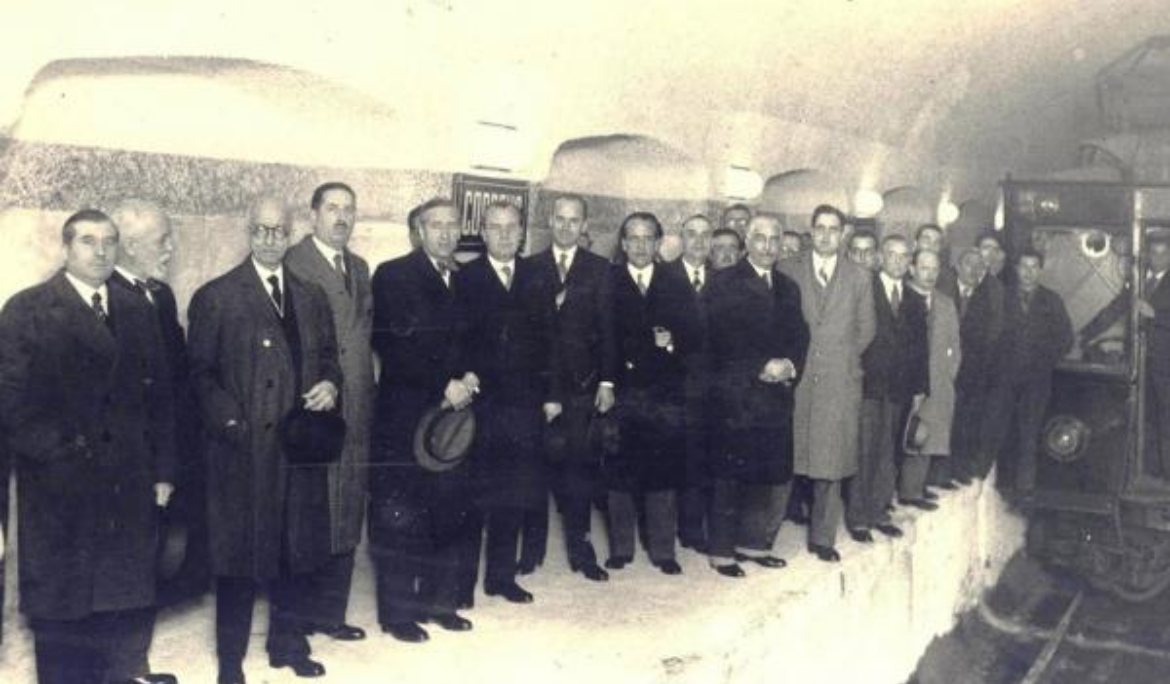
To understand the origin of this station, one must travel back in time to February 20, 1934, when it opened as the terminus of the second branch of Barcelona’s Gran Metro, connecting this seaside area with the city center.
Located at the lower end of Via Laietana, right in front of the historic Main Post Office (Correos) building, the station was part of the expansion of Barcelona’s metro network during the 1930s.
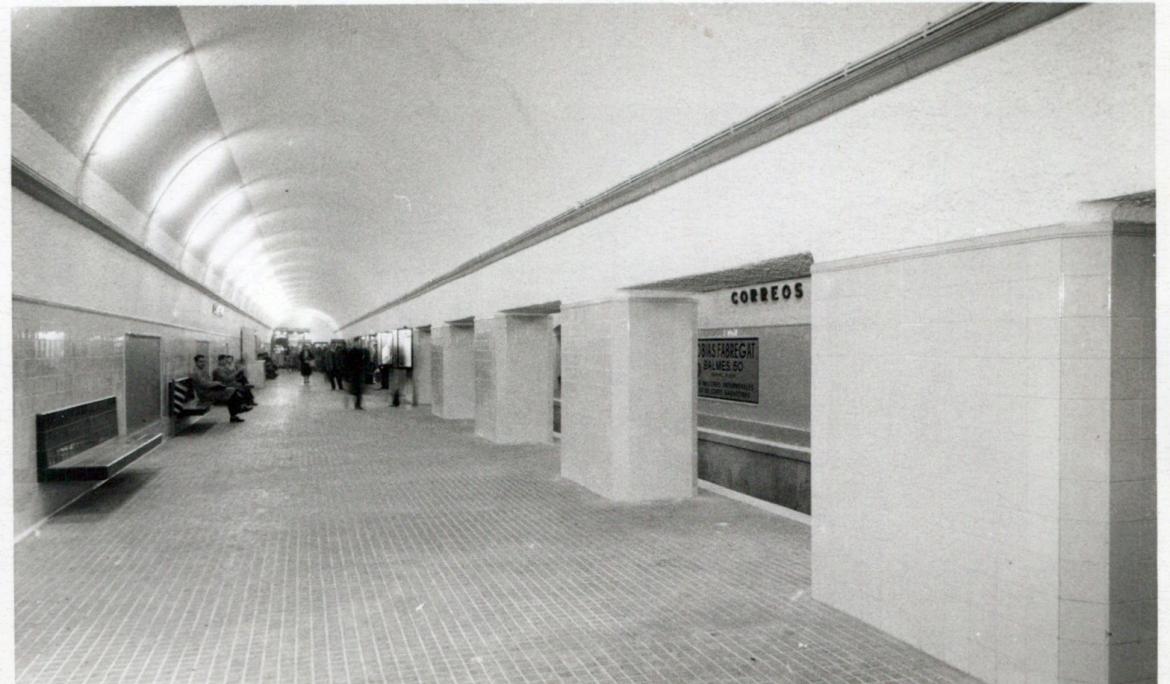
The station consisted of two parallel vaulted halls. One housed the track and a narrow platform, while the other was dedicated entirely to the passenger platform. Both halls were connected by ten large arches, three meters high, forming one of the most distinctive architectural features of the space.
Why Did It Close and Become a Ghost Station?
On March 20, 1972, Correus station received its last passengers and ceased service. The reason was the extension of Line 4 towards Barceloneta and Poblenou, which required transforming this entire section of the metro network.
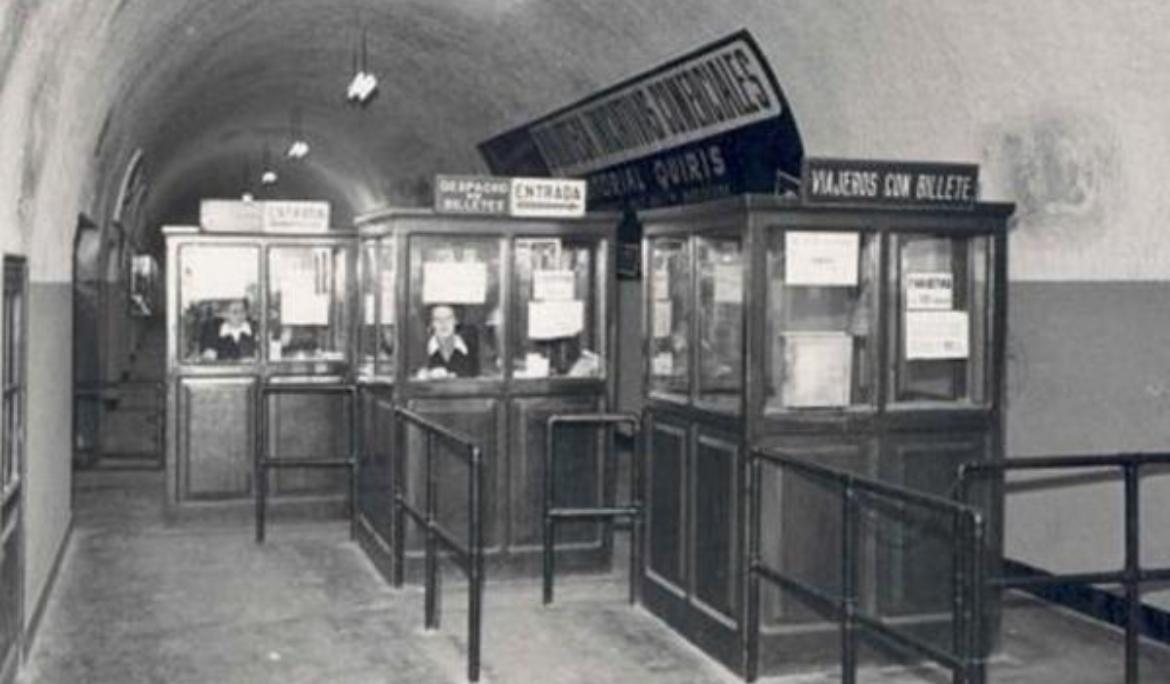
With its closure, street access was sealed off, and part of the old station structure was demolished to adapt the tunnel to the new train configuration. The main concourse also vanished, and the space was repurposed into a ventilation shaft.
The old platforms were partially trimmed down to provide the necessary gauge clearance for modern trains to pass through. For this reason, as trains travel today between Jaume I and Barceloneta, commuters can still catch glimpses of the surviving structures from the former station.
It is precisely this mix of abandoned space and preserved historic elements that turned Correus into one of the most celebrated ghost stations in the Barcelona metro network.
A Underground Time Capsule: 60s and 70s Advertising and Signage
For decades, the remains of the station have remained hidden from the public eye, yet several original elements have been preserved underground.
Among them are ceramic tiles, original station name lettering, and various examples of vintage billboard advertising from different eras. Among the ads still recognizable today are brands like Danone and local establishments like Mueblerías Asturias, which form part of the city's visual graphic memory.
These elements make it easy to picture what the station looked like in its glory days, offering a fascinating window into everyday life in mid-20th-century Barcelona.
How to Spot It Today
If you want to try to spot the Correus ghost station next time you ride the metro, keep your eyes on the window along the L4 stretch between Jaume I and Barceloneta.
As the train passes through this point, you can still make out structural walls and platform remnants illuminated briefly by the passing carriage lights.
With the Hola Barcelona Travel Card, you can pass by the ghost station as many times as you like.
Discover Barcelona’s History by Public Transport
Barcelona is a city filled with history, secrets, and hidden corners both above ground and under the streets. The best way to move around the city and explore all its neighborhoods and transit lines is through TMB's Metro and Bus network.
With your Hola Barcelona Travel Card, you enjoy unlimited travel for 24, 48, 72, 96, or 120 hours across the integrated public transport system. In addition, the card includes round-trip metro travel between the airport and central Barcelona.
Get your Hola Barcelona Travel Card online with a 10% discount and start exploring the city's best-kept secrets! Hola Barcelona takes you there!