If you are passionate about Gaudí's architecture, discover 7 spectacular and lesser-known buildings in Barcelona designed by other great masters. Hola Barcelona takes you there!
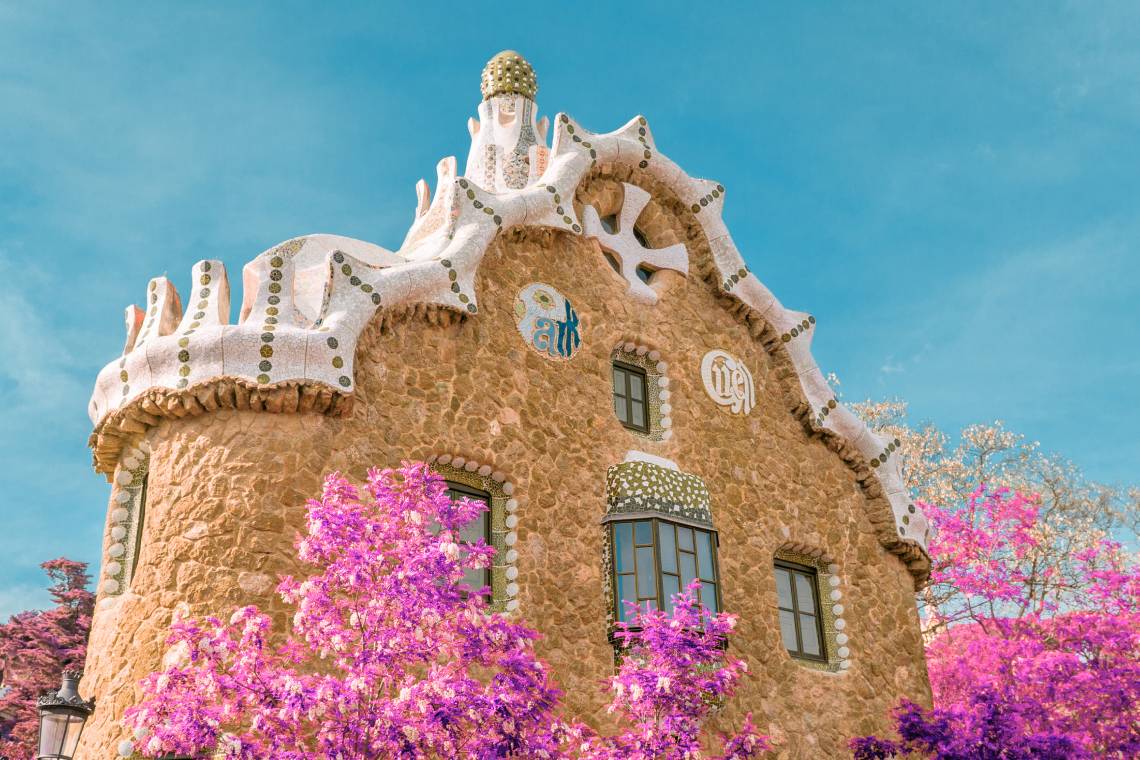
Antoni Gaudí is Barcelona's great genius, but he was not the only one: during the same era, the city experienced an unprecedented creative explosion where other great architects experimented with organic shapes inspired by nature, fairytale facades, multicolored mosaics, and artisan ironwork and stonework.
If you are fascinated by the Gaudí universe and want to discover unique architectural gems off the beaten tourist path, take note. If you like Gaudí, we propose a route through 7 buildings in Barcelona signed by eight different architects that is easy to do with the Hola Barcelona Travel Card.
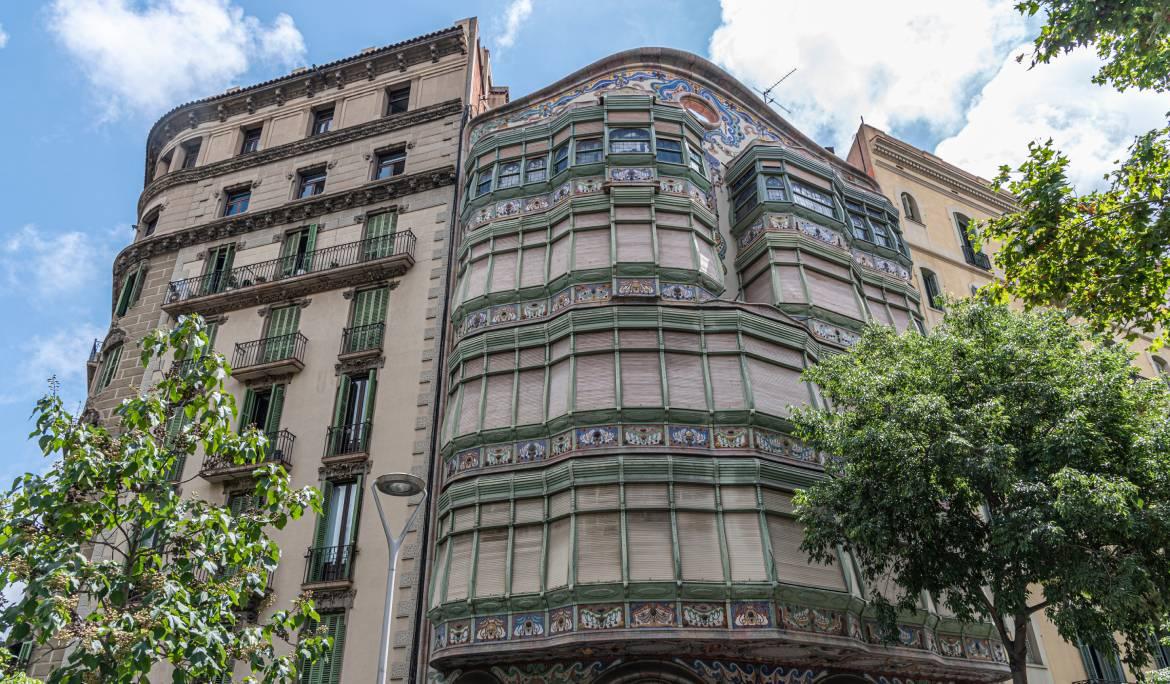
1. Casa Comalat by Salvador Valeri i Pupurull
If you fell in love with the organic expression of Casa Batlló, Casa Comalat will leave you speechless. Designed by architect Salvador Valeri i Pupurull (1911), this building features two surprisingly different facades. The main one on Avinguda Diagonal exhibits monumental Modernism, while the rear facade (on Carrer Còrsega) is a true festival of undulating wood, wrought-iron balconies, and colorful ceramic tiles in shade of green and blue.
How to get there:
Metro: Diagonal (L3 and L5).
Bus: Lines 6, 33, 34, H8, and V17.
Barcelona Bus Turístic: Casa Batlló – Museu Tàpies stop (Blue Route)..
2. Fabra Observatory by Josep Domènech i Estapà
Located in the Collserola mountain range, the Fabra Observatory (1904) is one of Josep Domènech i Estapà's most unique works. This non-residential building combines a understated Modernist style with Neoclassical elements, highlighted by its large revolving dome, large floral-arched windows, and distinct institutional ornamentation. A monument dedicated to science that connects nature, architecture, and stargazing.
How to get there:
FGC train: Line L7 to Av. Tibidabo + Bus 196 + Tibidabo Funicular.
Bus: Lines 111 and 196 (with a short final walk along Camí de l'Observatori).
Barcelona Bus Turístic: Tramvia Blau – Tibidabo stop and local transport connection.
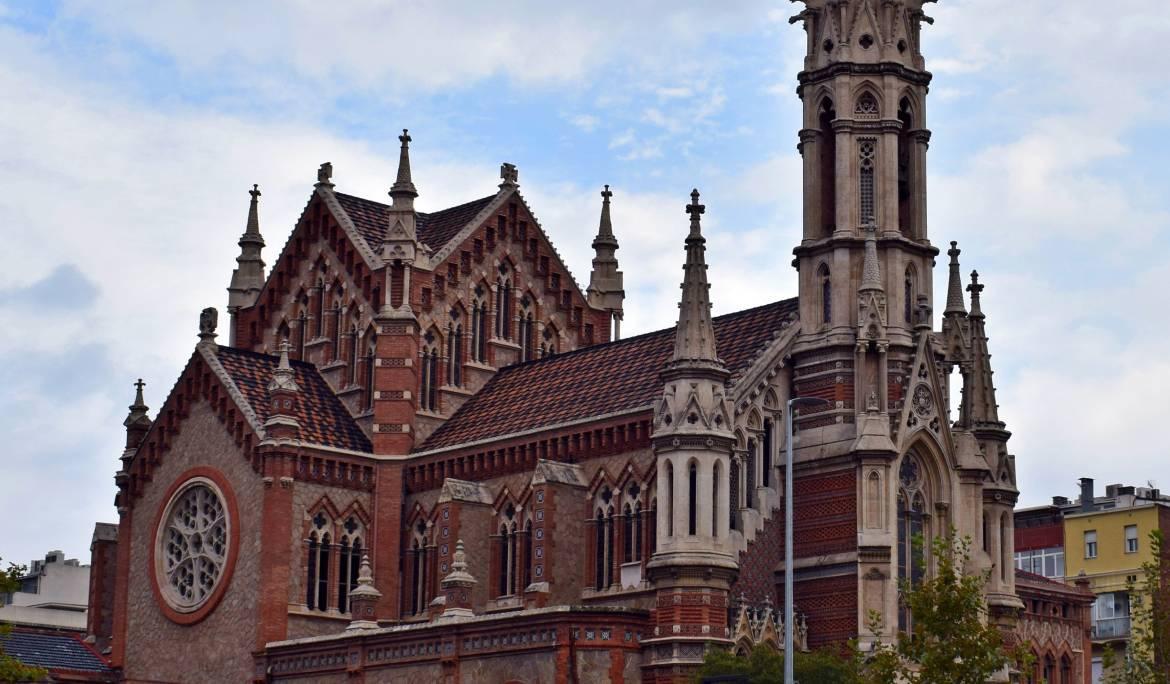
3. Church of les Saleses by Joan Martorell
Joan Martorell was the master from whom Gaudí learned his craft and who recommended him to take over the Sagrada Família project. The Church of les Saleses (1885), on Passeig de Sant Joan, is an impressive Neo-Gothic temple featuring an exposed brick facade, colorful ceramics, sculpted reliefs, and a slender central bell tower that foretells the passion for verticality Gaudí would later develop.
How to get there:
Metro: Verdaguer (L4 or L5).
Bus: Lines 19, 33, 34, D50, H10, and V19.
Barcelona Bus Turístic: Passeig de Gràcia – Casa de les Punxes stop (Blue Route).
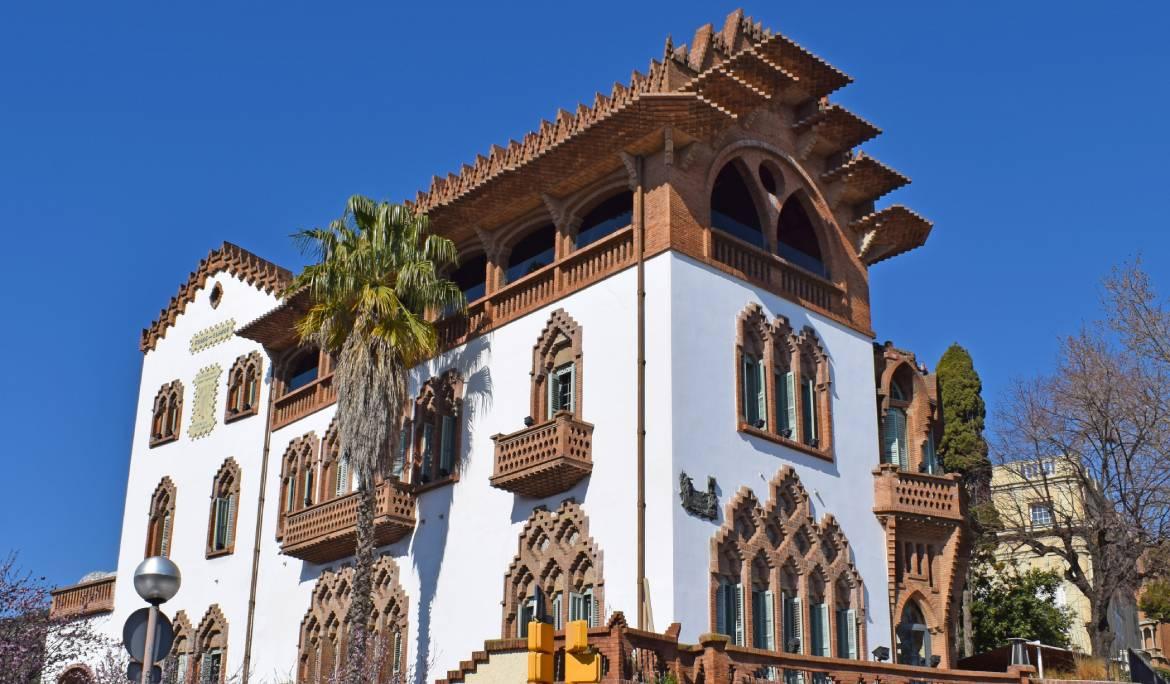
4. Casa Roviralta / El Frare Blanc by Joan Rubió i Bellver
Designed by Joan Rubió i Bellver, one of Gaudí's top disciples and collaborators, Casa Roviralta is a former farmhouse transformed between 1903 and 1913 into a unique stately home. Located on Avinguda del Tibidabo, it stands out for the sharp contrast between its white facade, exposed brick frames, colorful tiles, and an impressive tower with pointed arches.
How to get there:
FGC train: Avinguda Tibidabo (Line L7).
Bus: Lines V13, V15, 22, and H4.
Barcelona Bus Turístic: Tramvia Blau – Tibidabo stop (Blue Route).
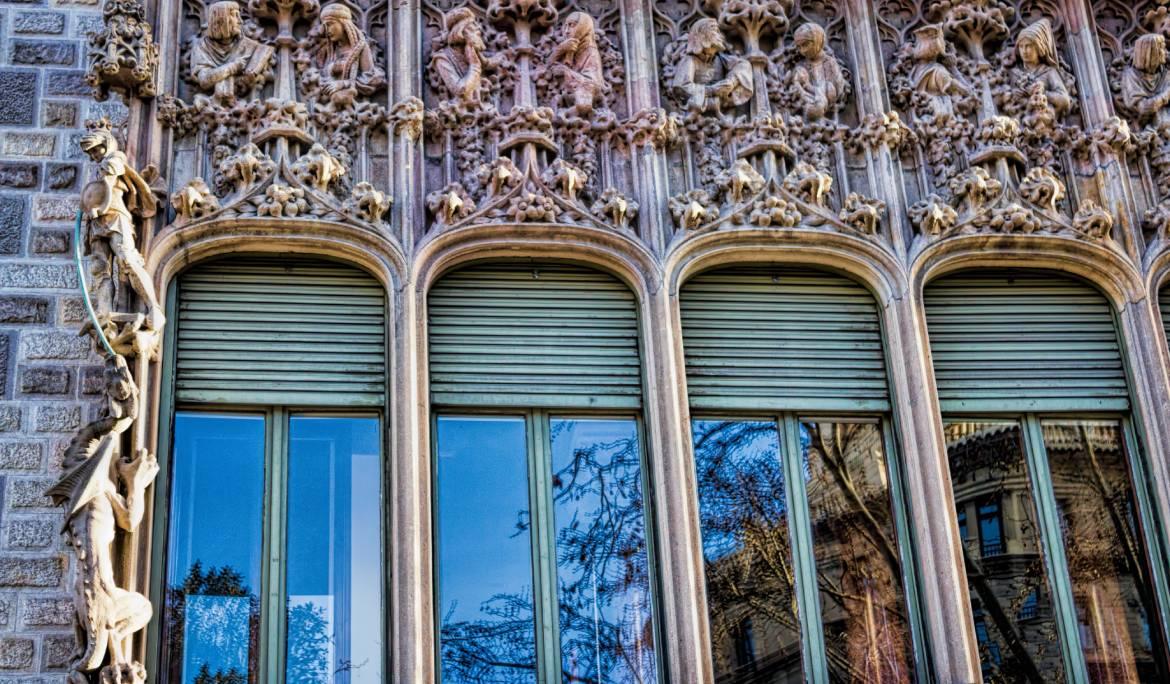
5. Palau Baró de Quadras by Josep Puig i Cadafalch
If you enjoy the medieval details and symbolism Gaudí incorporated into his projects, Palau Baró de Quadras will win you over. Josep Puig i Cadafalch transformed this Eixample building into a Neo-Gothic palace filled with stone monsters, dragons, and floral motifs on the main facade, while its interior hides a grand marble staircase and Neo-Moorish stained glass.
How to get there:
Metro: Diagonal (L3 or L5).
Bus: Lines 6, 7, 22, 24, V15, H8, and H10.
Barcelona Bus Turístic: Casa Batlló – Museu Tàpies stop (Blue and Red Routes).
6. Casa Thomas by Lluís Domènech i Montaner
Much like Gaudí, Lluís Domènech i Montaner mastered the integration of traditional crafts into architecture. Casa Thomas (1895-1898), on Carrer de Mallorca, is noted for its large ground-floor arches (designed to illuminate a former printing workshop), raised floral motifs, wrought-iron work, and strikingly beautiful blue stained glass.
How to get there:
Metro: Verdaguer (L4 or L5) or Diagonal (L3/L5).
Bus: Lines 33, 34, H10, 39, and 47.
Barcelona Bus Turístic: Casa Batlló – Museu Tàpies stop (Blue Route).
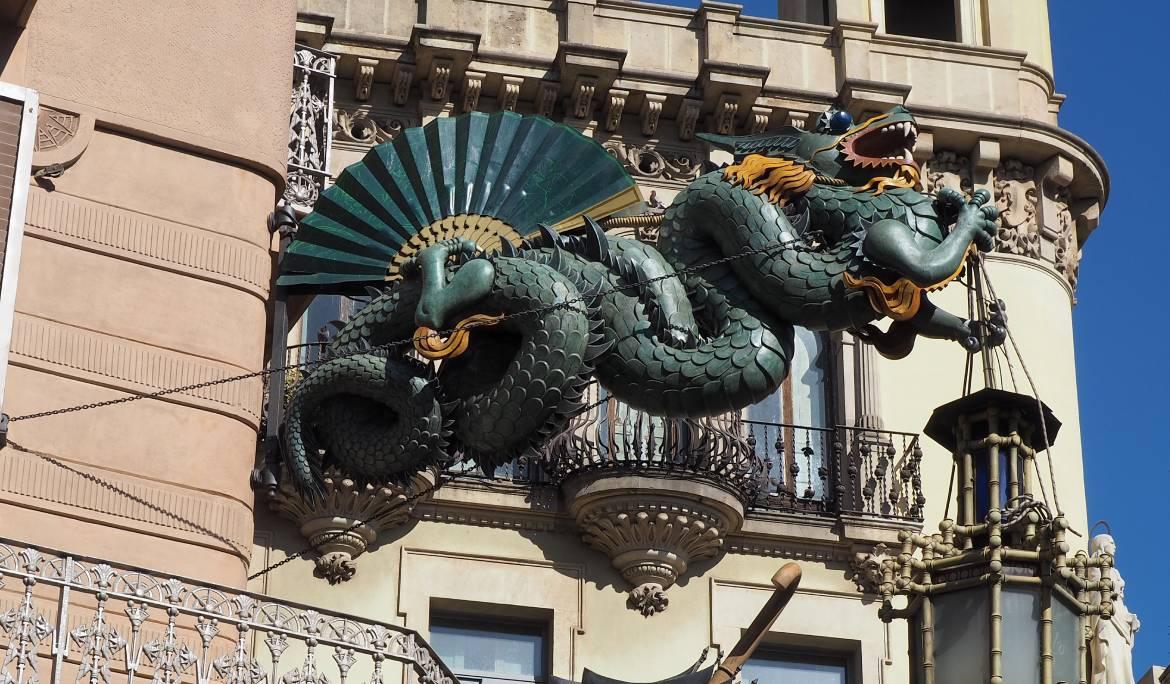
7. Casa Bruno Cuadros / The House of Umbrellas by Josep Vilaseca
Anyone who loves the vibrant mix of styles and colors of Casa Vicens will enjoy stopping on La Rambla in front of Casa Bruno Cuadros. Renovated by Josep Vilaseca in 1883, this facade combines traditional Barcelona architecture with Oriental elements. Its most iconic feature is a large wrought-iron Chinese dragon projecting from the corner holding an umbrella, accompanied by Japanese fans and prints.
How to get there:
Metro: Liceu (L3).
Bus: Lines 59, V13, and V15.
Barcelona Bus Turístic: Plaça de Catalunya stop (Blue and Red Routes).
Discover 7 Lesser-Known Buildings in Barcelona with the Hola Barcelona Travel Card
Discovering these 7 unique buildings will lead you through fascinating corners of the Eixample, La Rambla, and the scenic heights of the city in the Collserola hills. The best way to connect all these stops quickly and worry-free is by using the public urban network.
With your Hola Barcelona Travel Card, you will have unlimited access for 24, 48, 72, 96, or 120 hours across the entire Metro network, TMB buses, Tram, FGC, and Rodalies de Catalunya (Zone 1), including the metro trip (L9 South) to and from Josep Tarradellas Barcelona-El Prat Airport.
Get your Hola Barcelona Travel Card online with a 10% discount and experience an unforgettable architectural tour at your own pace! Hola Barcelona takes you there!