Barcelona Neighborhood Guide: How to Navigate the City’s Mosaic
Barcelona is not just one city, but a union of many villages that have integrated over centuries. From the Gothic charm of Ciutat Vella to the bohemian spirit of Gràcia or the technological modernity of Poblenou, each district has its own personality. Here is a guide to moving between Barcelona's neighborhoods efficiently! Hola Barcelona takes you there!
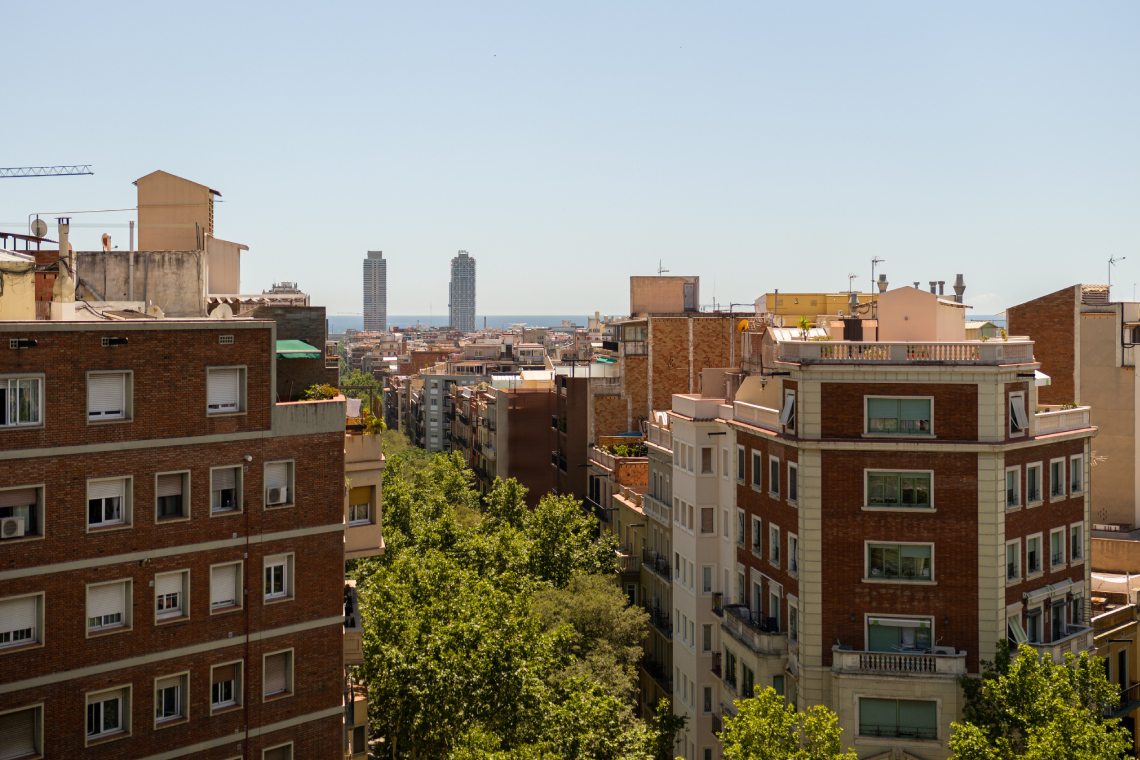
Exploring this urban richness is simple if you know how to combine metro and bus lines. Moving from the beach to the mountains, or from a medieval palace to a Modernist gem, is a matter of minutes if you plan your trips well. With your Hola Barcelona Travel Card, you can hop from one neighborhood to another with unlimited rides, discovering Barcelona at your own pace.
1. From the Gothic Quarter to Gràcia: From History to Local Life
The Gothic Quarter is the birthplace of the city, filled with narrow stone alleys. In contrast, Gràcia is the neighborhood of squares, artisans, and community life. They are two different worlds but very easy to connect.
How to get there?
Metro: L3 (from Liceu or Catalunya to Fontana). This is the most direct connection.
Bus: V17. This line crosses the entire city center and heads up toward the upper part of Gràcia.
Barcelona Bus Turístic: The Blue Route connects Plaça Catalunya with Passeig de Gràcia (the southern entrance to Gràcia).
2. From Eixample to Poblenou: From Modernism to Design
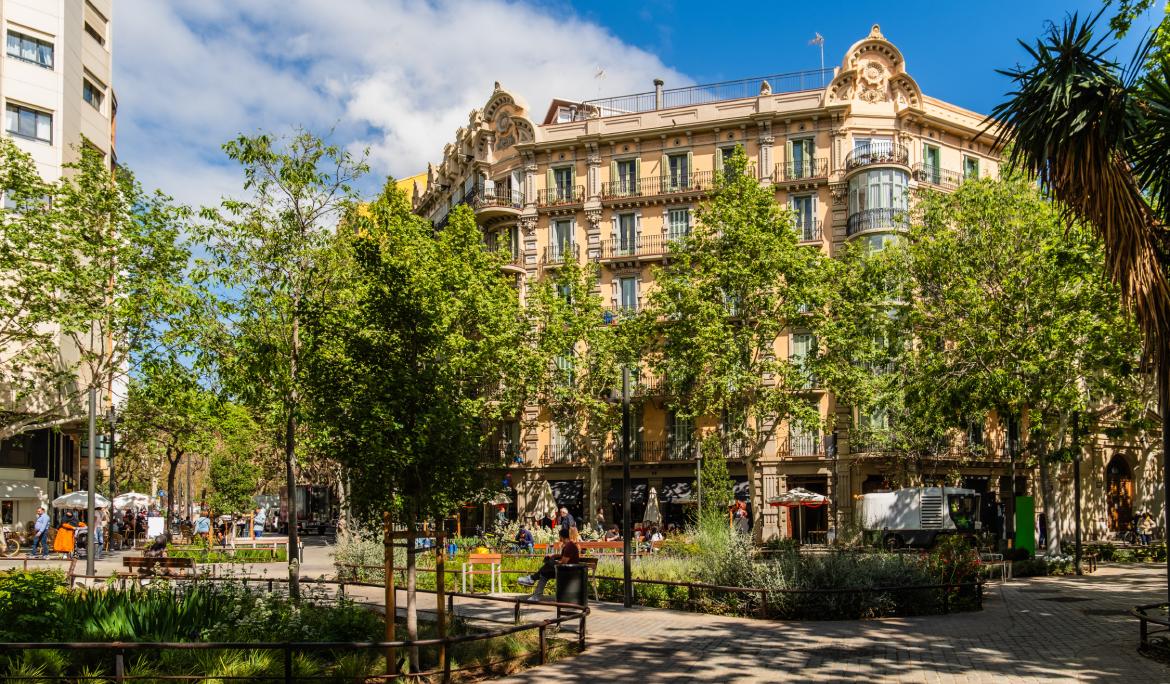
Eixample is the district of orthogonal blocks and Gaudí’s architecture. Poblenou, the former "Catalan Manchester," is now the trendiest neighborhood with its beaches and the 22@ technology district.
How to get there?
Metro: L4 (from Passeig de Gràcia or Urquinaona to Poblenou or Llacuna).
Bus: H12 and 7. These lines run along Gran Via and drop you near the upper part of the neighborhood.
Barcelona Bus Turístic: The Red Route covers the entire Poblenou seafront.
3. From Sants to Montjuïc: From the Station to the Magic Mountain
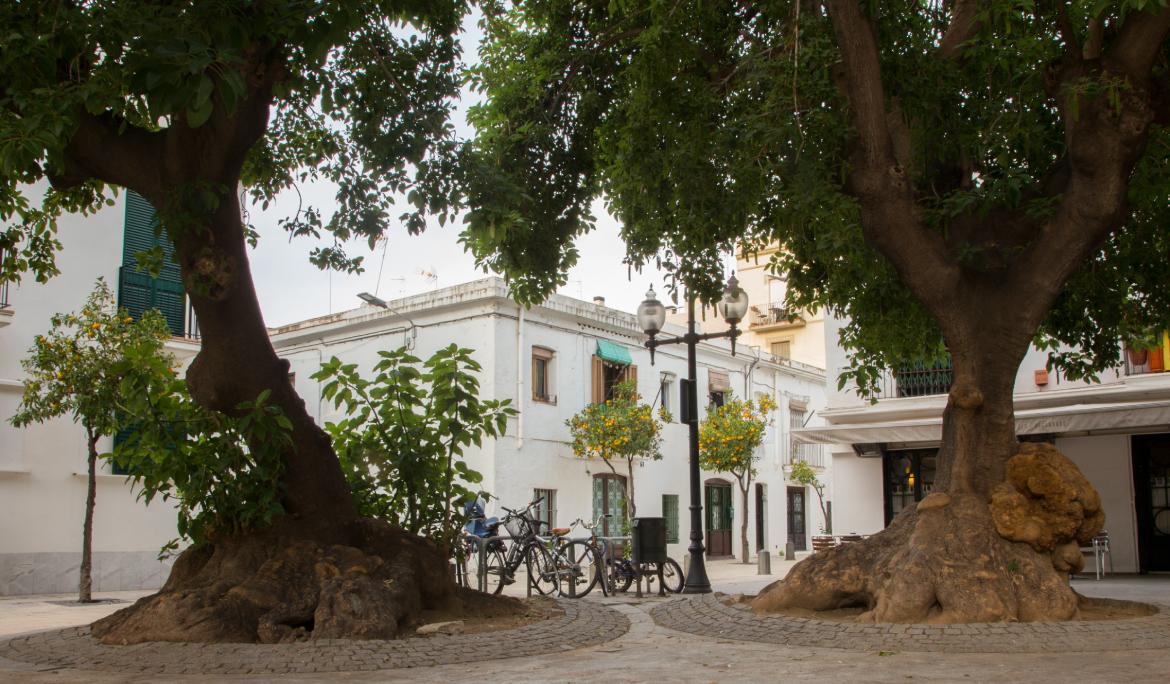
Sants is a vibrant, family-oriented commercial neighborhood located right next to Montjuïc, the city’s great green lung filled with museums and gardens.
Metro: L1 or L3 (to Espanya, the gateway to the mountain).
Bus: 150. This line is key: it goes from Plaça Espanya up to Montjuïc Castle. Bus 55 is also an option.
Barcelona Bus Turístic: The Red Route has lots of stops around the mountain and Poble Espanyo.
4. From El Born to Barceloneta: From Medieval Trade to the Sea
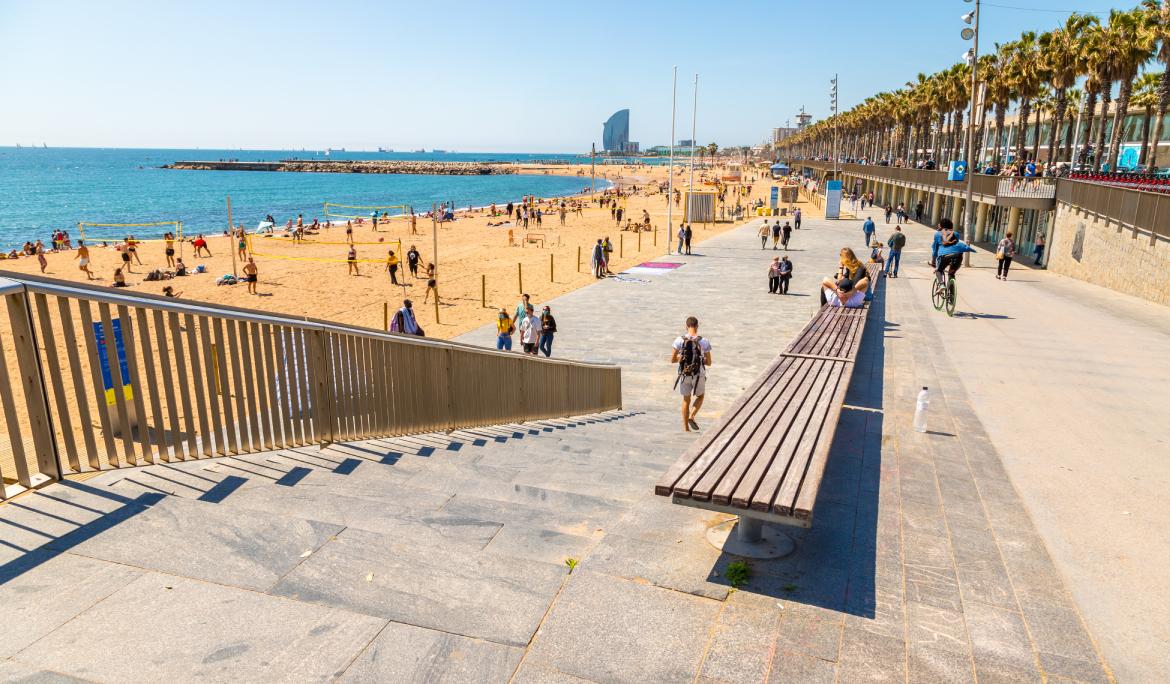
El Born is all about trends and culture, while Barceloneta preserves its fishing essence and is the ideal place to enjoy the Mediterranean. They are separated only by Via Laietana..
Metro: L4 (from Jaume I to Barceloneta). It’s just one stop!
Bus: V15, V19, and 47. They drop you just a few meters from the beach.
Barcelona Bus Turístic: Stops of Pla de Palau or Museu d'Història de Catalunya (Red Route).
Get your ticket here and start going from one neighborbood to another!
5. From Les Corts to Sarrià: From Football to Traditional Elegance
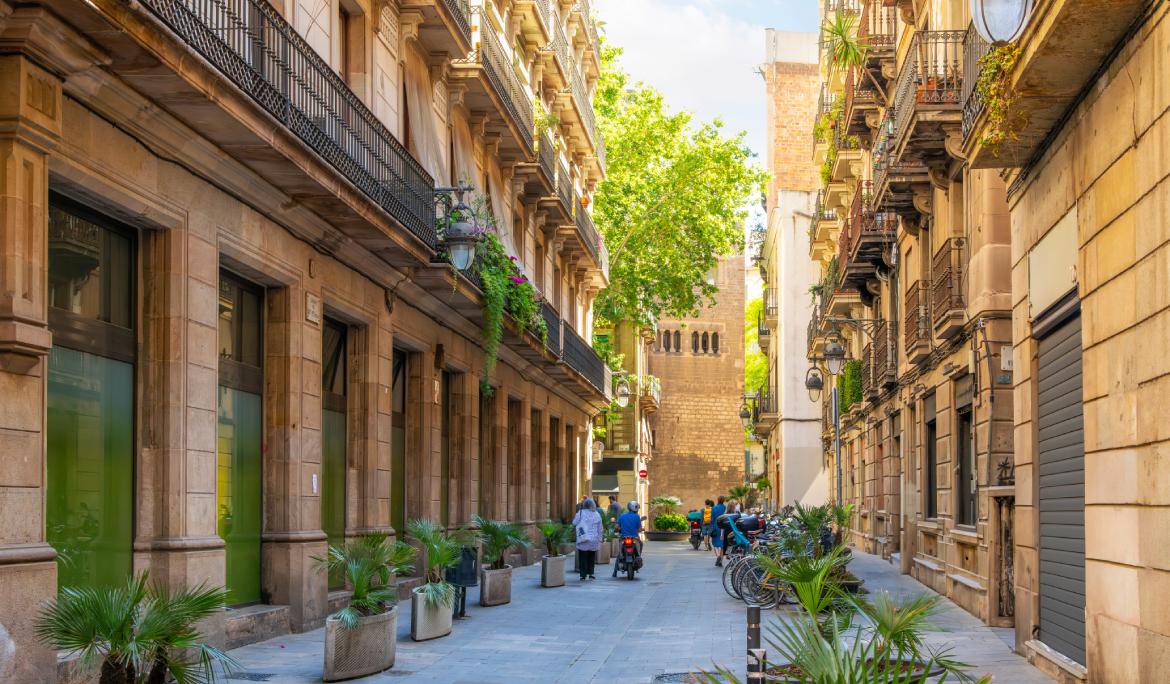
Les Corts is home to the Camp Nou, while Sarrià still maintains the air of an independent village with low houses and traditional bakeries
How to get there:
Bus: 3 and H6. These are transversal lines that connect the University Zone with the heart of Sarrià.
Barcelona Bus Turístic: The Blue Route takes you from Camp Nou to the Pedralbes Monastery and Sarrià.
Tips for moving between Barcelona's neighborhoods
Barcelona is designed with an orthogonal bus network (horizontal, vertical, and diagonal) that makes getting around very intuitive:
- H Lines (Horizontal): Such as the H12, these run across the city from Besòs to Llobregat.
- V Lines (Vertical): Such as the V15 or V17, these connect the sea with the mountains.
- D Lines (Diagonal): Such as the D20, these follow axes like Paral·lel Avenue.
Don't just stay in the center; Barcelona is a mosaic of realities waiting to be discovered Hola Barcelona takes you there!