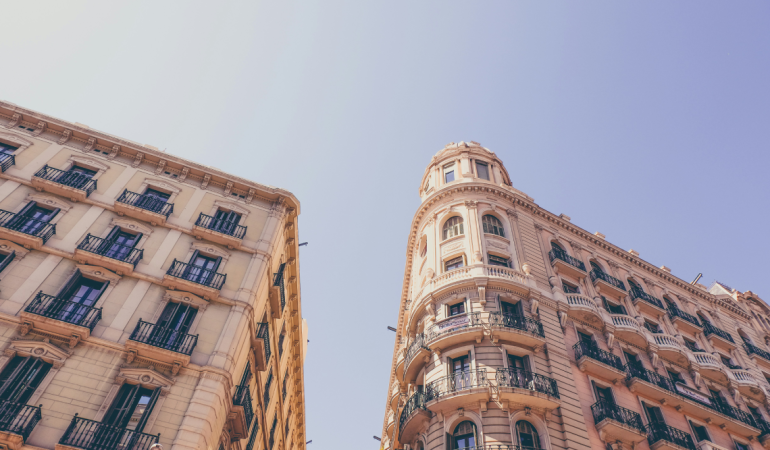
Barcelona’s architecture goes far beyond Modernisme and Gaudí. If you really want to get to know the city’s architectural soul in just three days, here’s the perfect itinerary—easily explored using public transport. Hola Barcelona takes you there!
Barcelona is a city you can walk through as if you were travelling in time, from Roman Barcino to the tech‑driven districts of the 21st century. With the Hola Barcelona Travel Card, you can enjoy unlimited travel by metro and bus and follow this three‑day architectural route without worrying about getting around.
Day 1: From Roman Barcelona to the Medieval Gothic Quarter
If you start in Ciutat Vella, you’ll see how Roman and medieval Barcelona coexist just a few steps apart. Here are the highlights you shouldn’t miss:
- Temple of Augustus: Roman columns hidden among the narrow streets of the Gothic Quarter.
- The Roman Wall: A glimpse of Barcino’s original layout.
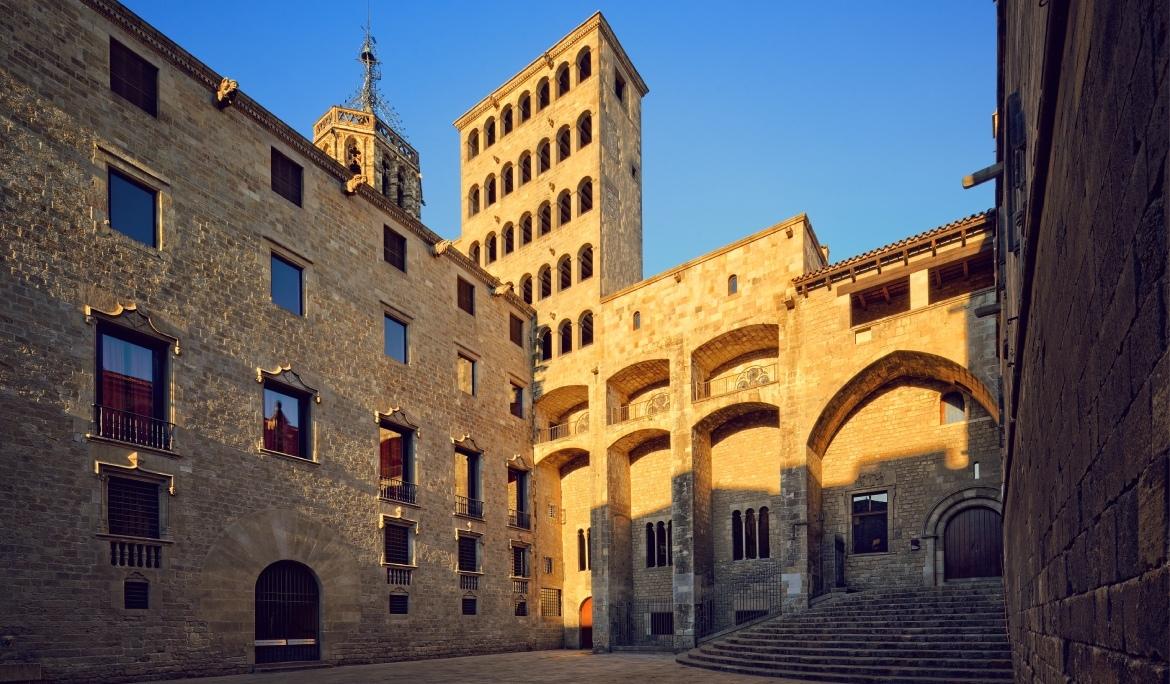
- MUHBA and Plaça del Rei: An underground museum of Roman remains and a picture‑perfect square.
- Barcelona Cathedral: A striking example of Catalan Gothic architecture dominating the heart of the old town.
- Santa Maria del Mar: The people’s cathedral, elegant, bright and a symbol of Mediterranean Gothic style.
How to get there:
Metro: L4 - Jaume I / L3 - Liceu
Bus: V15, V17, 47, 59, V13
If you’ve enjoyed discovering the city’s oldest layers, day two of this architectural journey will take you to Barcelona’s most creative and Modernista buildings, still with the same ticket, thanks to the Hola Barcelona Travel Card.
Day 2: Discover Modernista architecture and the Eixample
On your second day, head to the Eixample district, the birthplace of Catalan Art Nouveau. Get ready to see some of the most spectacular buildings, façades, rooftops and interiors in Barcelona
- Casa Batlló, Casa Amatller and Casa Lleó Morera: the perfect introduction to the world of Barcelona’s Modernista movement.
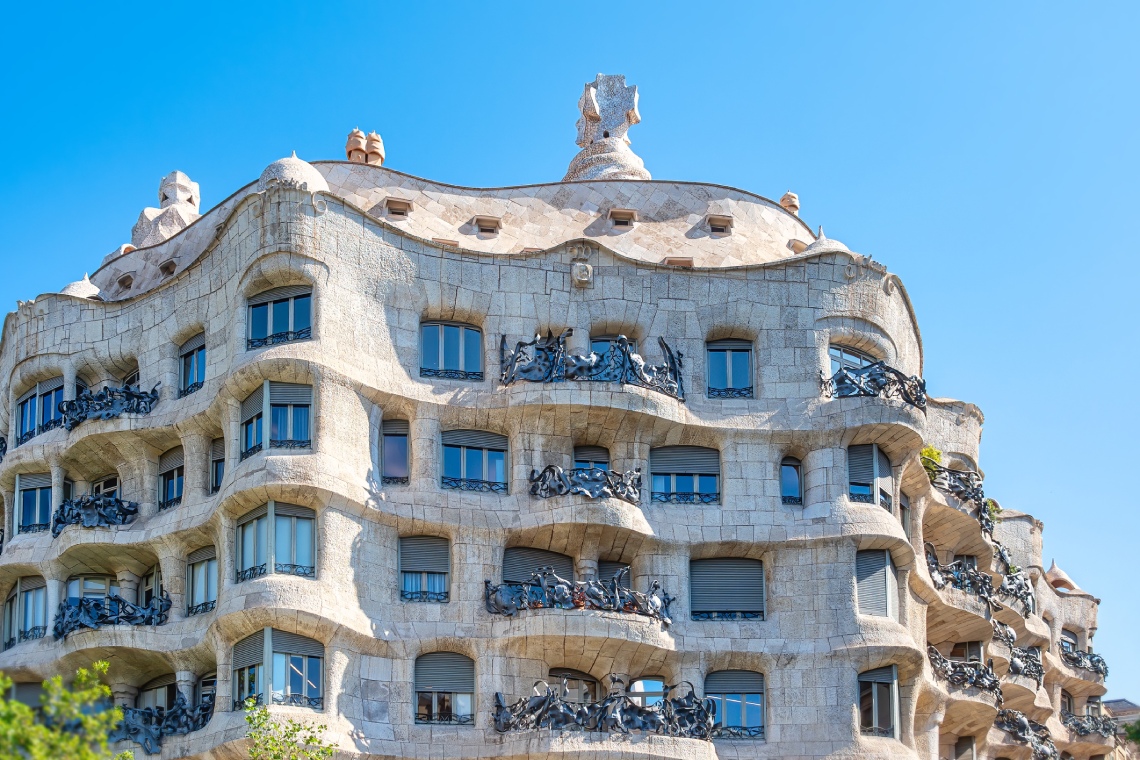
- Casa Milà (La Pedrera): the city’s most famous undulating façade and one of Gaudí’s living masterpieces.
- Casa de les Punxes: a Modernista castle right in the middle of the city, crowned with pointed towers.
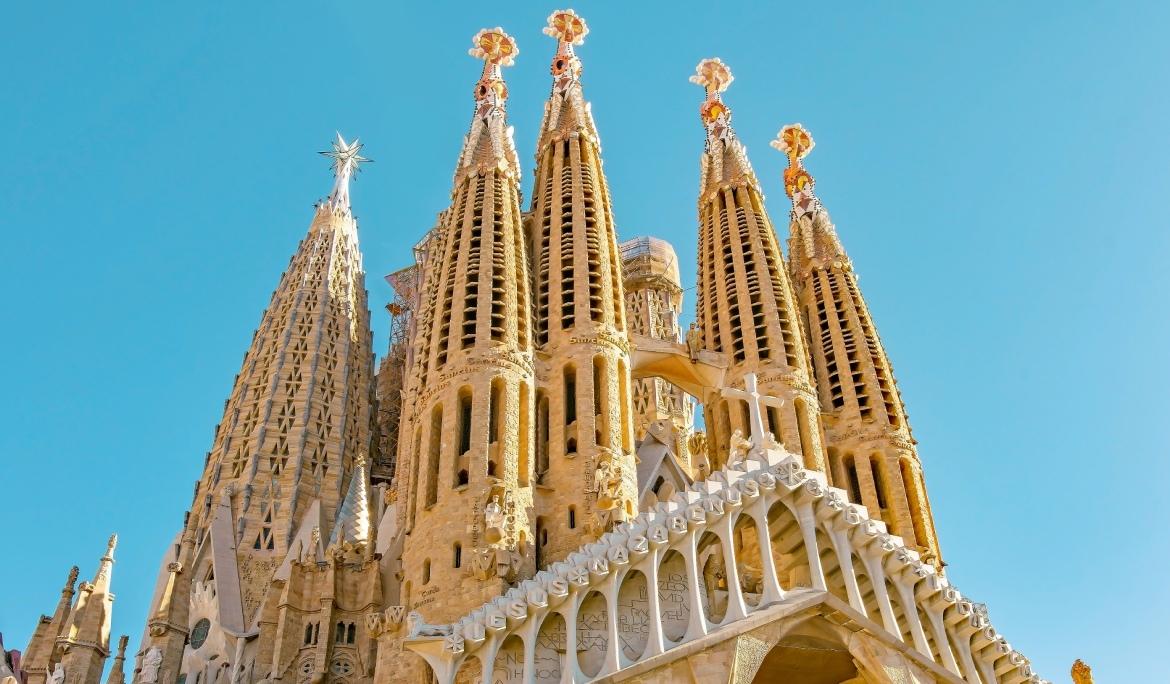
- La Sagrada Família: Gaudí’s most iconic temple, a monumental work that is still growing.
- Hospital de Sant Pau: an extraordinary Modernista complex designed as a garden city devoted to healing.
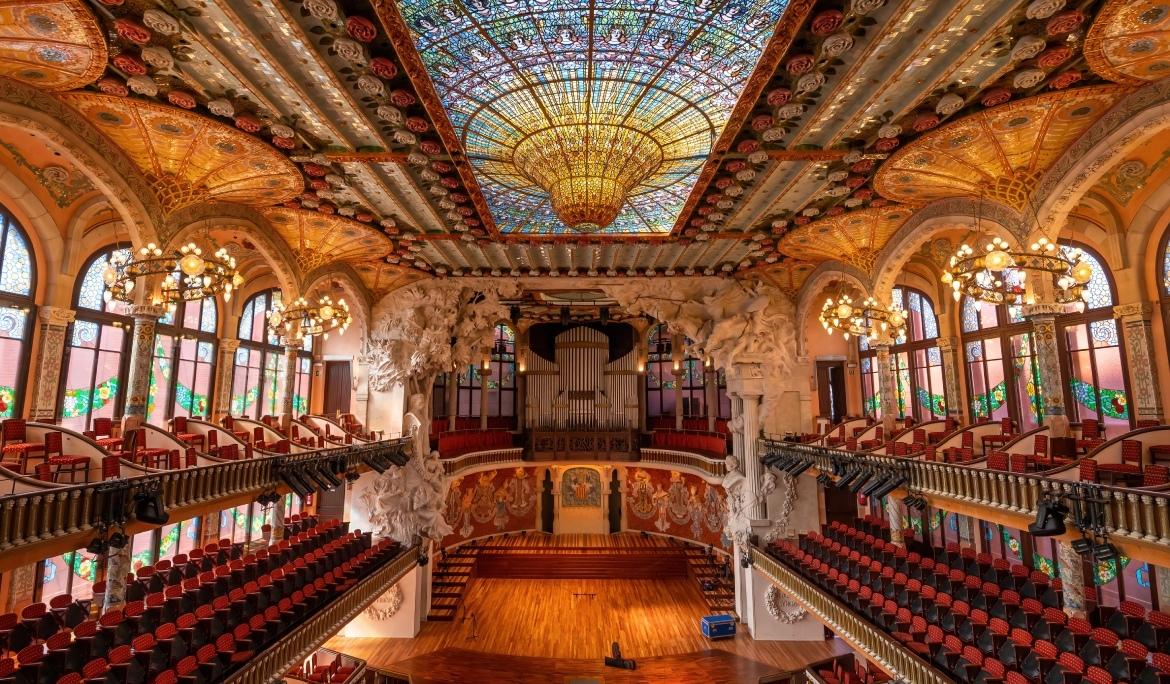
- Palau de la Música: a hidden gem of Catalan Modernisme that many visitors overlook. Make sure you don’t.
How to get there:
Metro: L2, L3, L4 - Passeig de Gràcia / L2, L5 - Sagrada Família / L5 - Sant Pau - Dos de Maig.
Bus: V15, 22, 24, 6, 7, 33, H8, D50, 47
All the city’s most iconic landmarks are within reach with a single public transport ticket. With the Hola Barcelona Travel Card you avoid parking hassles and make your trip more sustainable.
Day 3: The architecture of modern Barcelona
Your final day ends by the sea breeze, following a route along the city’s waterfront and up to Montjuïc, where you’ll find some of the most contemporary buildings in Barcelona’s most creative and tech‑driven districts.
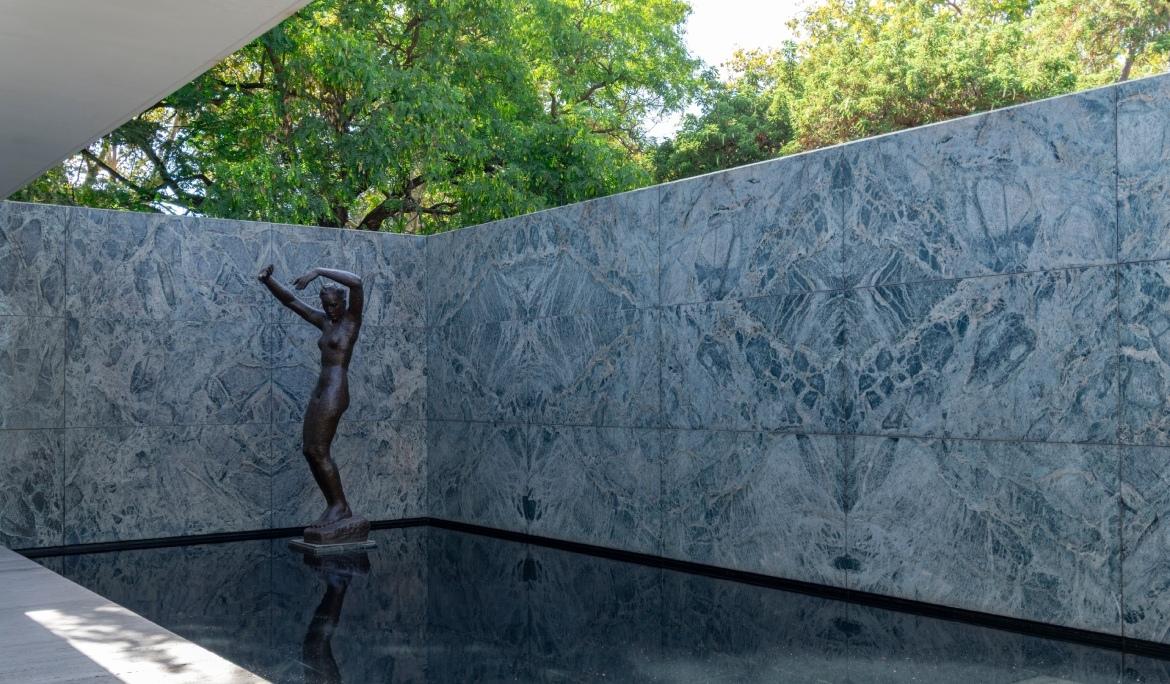
- The German Pavilion and the Miró Foundation: an iconic duo of modern architecture waiting for you on Montjuïc.
The Olympic Port: discover the modern architecture of a Barcelona that opens out to the sea.
Torre Glòries and the Design Museum: the gateway to the 22@ district, where big ideas take shape.
Media‑TIC and the Fòrum building: a glimpse of Barcelona’s future and some of the city’s most unconventional modern structures.
How to get there:
Metro: L3 - Plaça Espanya / L4 - Ciutadella -Vila Olímpica / L1 - Glòries
Bus: 150, 55, V21, 59, H12, H16
In Barcelona, architecture has no limits, and neither do you.
With the Hola Barcelona Travel Card, you can combine metro and bus as many times as you like for 48, 72, 96 or 120 hours. It’s the easiest way to follow this route and experience Barcelona’s architecture over three days without a single worry. Hola Barcelona takes you there!